Artificial Grass Installation in San Diego: What to Expect From Start to Finish
If you are planning an artificial grass installation in San Diego, you likely want a clear picture of how the process works. Homeowners, pet owners, and commercial property managers are curious: what actually happens from start to finish? A professional install involves more than laying turf. It includes site preparation, drainage planning, precise installation, and final inspection to ensure the surface looks natural and performs well over time.
What happens during the first consultation?
The process begins with an on-site evaluation. The installer assesses how the space will be used and identifies factors that affect performance. For example, a pet run requires stronger drainage than a decorative front yard. Commercial properties may need turf that can handle heavy foot traffic.
Measurements are taken, slopes are reviewed, and material options are discussed. This is when you choose turf color, blade height, and backing type. For pet-friendly synthetic grass installations, odor control and rinse efficiency are usually part of the conversation.
How is the existing yard prepared?
Preparation sets the foundation for the entire project. Crews remove grass, weeds, roots, and debris, then reshape the area to guide water away from structures. Without proper grading, even high-quality turf can develop drainage problems.
A compacted base layer is installed to create a stable surface. This step prevents uneven spots and helps the turf maintain its shape. In synthetic turf installation, poor base preparation is one of the most common causes of early failure. According to the Synthetic Turf Council, proper base construction and drainage are critical to long-term turf performance.
How is the turf installed?
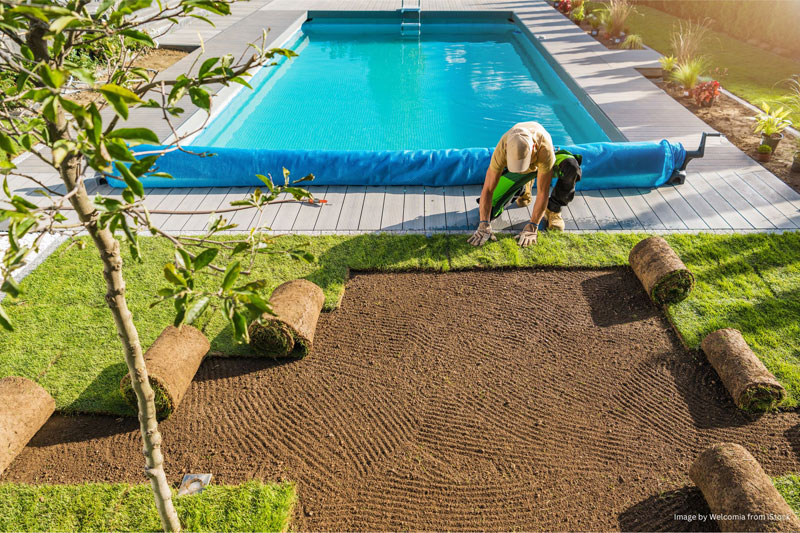
Once the base is ready, the turf is rolled out and positioned. Professional synthetic lawn installation services ensure proper alignment, secure seams, and a natural-looking finish. Installers align the blade direction so the lawn looks consistent across the entire space. They cut around edges, hardscapes, and fixtures with precision.
Seams are secured carefully to avoid visible lines. The turf is then anchored and brushed upright. Infill is often added to support the blades and improve durability. For pet-friendly artificial grass, specialized infill may be used to reduce odor and improve drainage performance.
What should you expect after installation?
After installation, the crew checks seams, edges, and drainage flow. You should receive clear instructions for maintenance. While synthetic grass reduces mowing and watering, it still requires occasional care.
Pet areas benefit from regular rinsing. High-traffic spots may need brushing to keep fibers upright. Leaves and debris should be cleared to maintain appearance and drainage.
Why hire local synthetic grass installers?
Working with local syntherica grass installers offers practical advantages. San Diego properties vary widely, from coastal climates to inland heat. Soil conditions, drainage needs, and usage patterns differ from one neighborhood to another.
Local conditions like soil type, drainage, and climate all impact performance, which is why region-specific guidance from sources like the University of California Agriculture and Natural Resources is valuable.
A local provider like So Cal Greens understands these conditions and can recommend turf systems that match how the space will be used. That leads to better long-term results and fewer maintenance issues.
FAQs About Artificial Grass Installation
How long does installation take?
Most residential installations are completed within one to several days. Larger or more complex sites may take longer due to grading and preparation.
Is artificial grass safe for pets?
Yes. When installed with proper drainage and appropriate infill, it provides a clean and durable surface for pets. Many homeowners choose pet-friendly artificial grass systems designed for easy cleaning and odor control.
Does artificial turf get hot?
Artificial grass can become warm in direct sunlight. Choosing lighter materials, adding shade, or rinsing the surface can help reduce heat.
How much maintenance is required?
Maintenance is minimal compared to natural grass. Occasional brushing, rinsing, and debris removal are typically sufficient.
Are rebates available?
Not always. Some programs exclude artificial turf, so it is important to confirm eligibility before starting your project.
Summary and Next Steps
A successful artificial grass installation follows a clear sequence: consultation, preparation, installation, and inspection. Each phase plays a role in how the final surface looks and performs. Property owners who understand this process can make better decisions and avoid common issues.
If you are planning a turf landscaping upgrade, the next step is to schedule a consultation and evaluate your space based on how it will be used.