Artificial Turf vs Natural Grass Southern California: Which Is Better?
For homeowners comparing artificial turf vs natural grass in Southern California, the choice often comes down to a few practical questions: How much water will the lawn require? How much time do you want to spend maintaining it? Will children or pets use the space? And how does the yard handle San Diego’s sunny, dry conditions?
Artificial turf eliminates mowing and routine lawn irrigation, while natural grass provides the feel and cooling benefits of a living lawn. Neither option is automatically right for every property. Understanding the trade-offs makes it easier to choose a surface that fits your yard and lifestyle.
How Do Artificial Turf and Natural Grass Compare?
Artificial turf reduces routine lawn maintenance. There is no mowing, edging, fertilizing, or regular irrigation required to keep the surface green. It does need occasional care, including debris removal, brushing, rinsing, and cleaning in areas used by pets.
Natural grass requires more consistent attention. Depending on the grass variety and property, homeowners may need to water, mow, edge, fertilize, manage weeds, and address worn or bare areas.
For homeowners who would rather spend less time maintaining a lawn, synthetic turf has a clear advantage. Those who enjoy maintaining a living landscape may prefer natural grass despite the extra work.
Which Lawn Uses Less Water?
Artificial turf uses substantially less water for routine lawn care because it does not need irrigation to grow. Water may still be used occasionally for cleaning, cooling the surface, or rinsing pet areas.
That distinction matters in Southern California, where outdoor landscaping accounts for a significant portion of residential water use. Choosing a lawn that does not depend on regular irrigation can reduce a home’s outdoor water demand.
Homeowners interested in water-saving landscaping should also consider the entire yard. Drought-tolerant plants, efficient irrigation, mulch, hardscape, and synthetic turf can be combined rather than treating the property as an all-grass or all-turf decision.
What Does Natural Grass Do Better?
Natural grass offers a cooler, living surface. That can be important in sunny yards where children or pets spend time outdoors during warm afternoons.
It also has the texture and seasonal characteristics some homeowners want from a traditional lawn. Natural landscaping can support soil health and habitat when grass is combined with climate-appropriate plants and thoughtfully designed planting areas.
The tradeoff is ongoing care. A healthy lawn needs water and regular maintenance, and results can vary based on shade, soil, irrigation coverage, foot traffic, and grass variety.
Does Artificial Turf Get Hot in San Diego?
Yes. Artificial turf can become noticeably warm in direct sunlight. When comparing synthetic turf vs. real grass, surface temperature deserves consideration, particularly in exposed areas with little afternoon shade.
Yard orientation, surrounding hardscape, turf materials, and shade can affect how warm the surface becomes. If the lawn will be used regularly by children or pets, discuss heat exposure and turf selection before installation.
Natural grass generally provides a cooler surface. Artificial turf, however, avoids brown patches and seasonal changes caused by heat, irrigation problems, or heavy use.
When Does Artificial Turf Make Sense for a San Diego Yard?
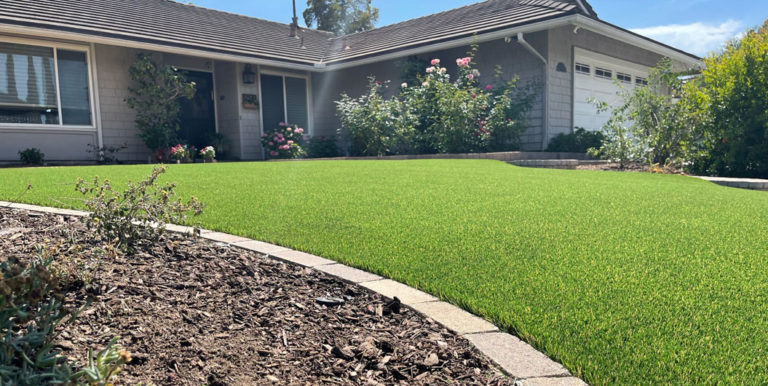
Artificial turf is well suited to homeowners who want a consistent lawn appearance without regular watering and mowing. It can also work well in pet areas, heavily used backyards, narrow side yards, and locations where maintaining healthy natural grass has been difficult.
Installation quality matters. An artificial turf project should account for grading, drainage, base preparation, seams, edges, and how people or pets will use the area. Poor preparation can affect drainage and the finished appearance, so evaluating the site before choosing materials is important.
Which Option Costs More Over Time?
Artificial turf generally requires a larger upfront investment, while natural grass creates recurring maintenance expenses.
A natural lawn may involve irrigation, mowing equipment or lawn service, fertilizer, weed control, repairs, and periodic reseeding or replacement. Artificial turf shifts more of the expense toward the initial installation, followed by lighter ongoing maintenance.
Because yard size, drainage needs, site preparation, turf selection, and existing conditions vary, a simple price-per-square-foot comparison does not tell the whole story. Homeowners should compare both the initial project cost and expected long-term upkeep.
So, Which Is Better for Southern California?
In order to make this decision, start with how you actually use your yard.
Artificial turf is often the stronger fit when reducing irrigation, mowing, and routine maintenance are top priorities. Natural grass makes more sense when homeowners value a living lawn, cooler surface temperatures, and traditional grass underfoot.
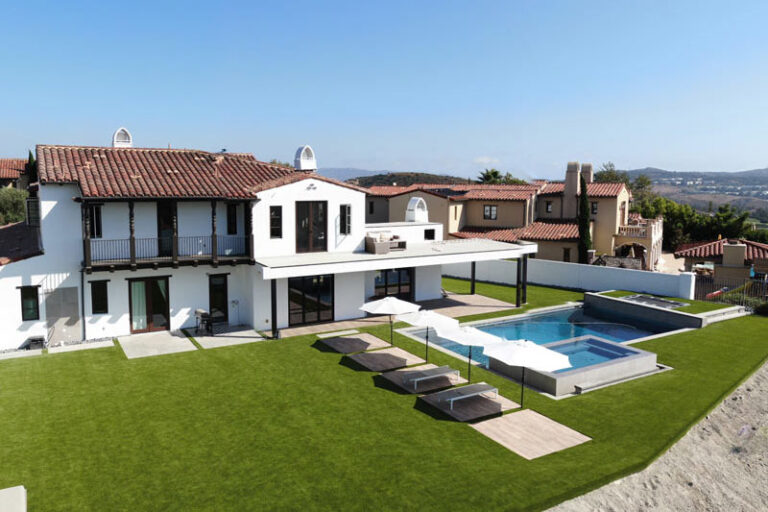
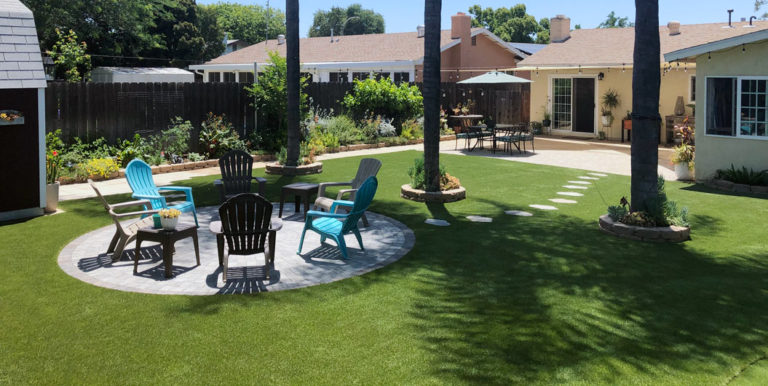
Some properties benefit from using both. Synthetic turf can provide durable lawn space while drought-tolerant planting beds add shade, texture, and living vegetation. The right layout depends on sun exposure, drainage, pets, foot traffic, maintenance preferences, and available space.
Frequently Asked Questions
Is artificial turf better than natural grass in Southern California?
It is often better for homeowners who prioritize lower water use and less routine lawn maintenance. Natural grass may be preferable when a cooler, living surface is more important.
Does artificial grass need water?
It does not need irrigation to grow. Occasional water may be used to rinse dust, clean pet areas, or cool the surface.
Is artificial turf maintenance-free?
No. It requires less routine care than natural grass, but debris removal, brushing, cleaning, and pet-area maintenance may still be necessary.
Can artificial turf work for dogs?
Yes. Turf can be installed for pet use, but drainage, cleaning, odor management, and appropriate materials should be considered during planning.
Does artificial turf stay green year-round?
Yes. Synthetic turf maintains its color without relying on seasonal growth or regular irrigation.
What should I consider before installing artificial turf?
Evaluate drainage, direct sunlight, pets, foot traffic, yard usage, maintenance expectations, material quality, and installation requirements before choosing a product.
Summary
The artificial turf vs natural grass in Southern California comparison is ultimately about priorities. Artificial turf reduces irrigation and routine lawn work while maintaining a consistent appearance. Natural grass provides a living, generally cooler surface but requires more water and ongoing care.
For San Diego homeowners, the most useful approach is to evaluate the property itself. Sun exposure, drainage, household use, pets, maintenance preferences, and long-term costs should guide the decision—not appearance alone.